
How to Display Small Art Prints So They Feel Intentional, Not Lost

Three small nature-inspired art prints displayed on a wooden picture ledge
I have always loved the intimacy of small artwork.
A large painting greets you from across the room. A small print asks you to come closer. You begin to notice the marks, colors and quiet details that would be easy to miss from a distance.
Still, small artwork can feel awkward when it is placed alone on a broad, empty wall. That does not mean the print is too small or insignificant. It simply needs a setting that respects its scale.
Here are several ways to display small art prints so they feel considered, personal and fully at home.
Begin With the Place Where You Naturally Pause
Small artwork is especially rewarding in the parts of a home where people slow down.
Look beyond the large wall over the sofa and notice the quieter spaces:
A bedside table
A reading corner
A writing desk
The wall beside a bookcase
A kitchen shelf away from water and heat
A small entry table
The landing at the top of a staircase
A narrow wall between two doors
These are places where a print can be seen from only a few feet away. That closeness suits detailed watercolors, intimate landscapes and artwork with a personal story.
Place the print where you will actually see it. A small piece beside the chair where you read every evening may become more meaningful than a larger work in a room you rarely use.
Give the Print a Little More Presence With a Mat

Small watercolor print before and after adding a cream mat and wood frame
A generous mat can make a small print feel settled and important without pretending it is larger than it is.
White and soft cream mats keep the presentation light. A warm gray, muted blue or deep green mat can pull out a quieter color within the artwork. Dark mats feel more dramatic, so I prefer to use them when the print already has enough light to hold its own.
The mat does more than fill space. It creates a pause between the artwork and the frame. That separation gives your eye time to enter the image.
For a nature-inspired watercolor such as Where Wildflowers Meet the Sky, a soft ivory mat and simple natural-wood frame would preserve the freshness of the color while giving the print a calm boundary.
Before ordering a custom mat, try laying the print on several sheets of colored paper. Step back and notice what changes. One color may make the sky clearer. Another may bring forward a small flower or warm patch of earth you had barely noticed before.
Choose a Frame That Supports the Artwork
A small frame is visible from close range, so its color and texture matter.
Natural wood feels warm and relaxed. Narrow black frames create definition and work well when the artwork contains dark lines or strong contrast. Soft gold can bring warmth to a luminous landscape, floral painting or piece with metallic details.
The frame does not need to match every other frame in the room. It should feel related to something nearby: the wood of a shelf, the metal of a lamp or a color within the artwork.
Avoid an overly heavy frame around a delicate print. If the frame is the first thing you notice, try a narrower profile or a wider mat.
Let Small Art Live Somewhere Other Than the Wall
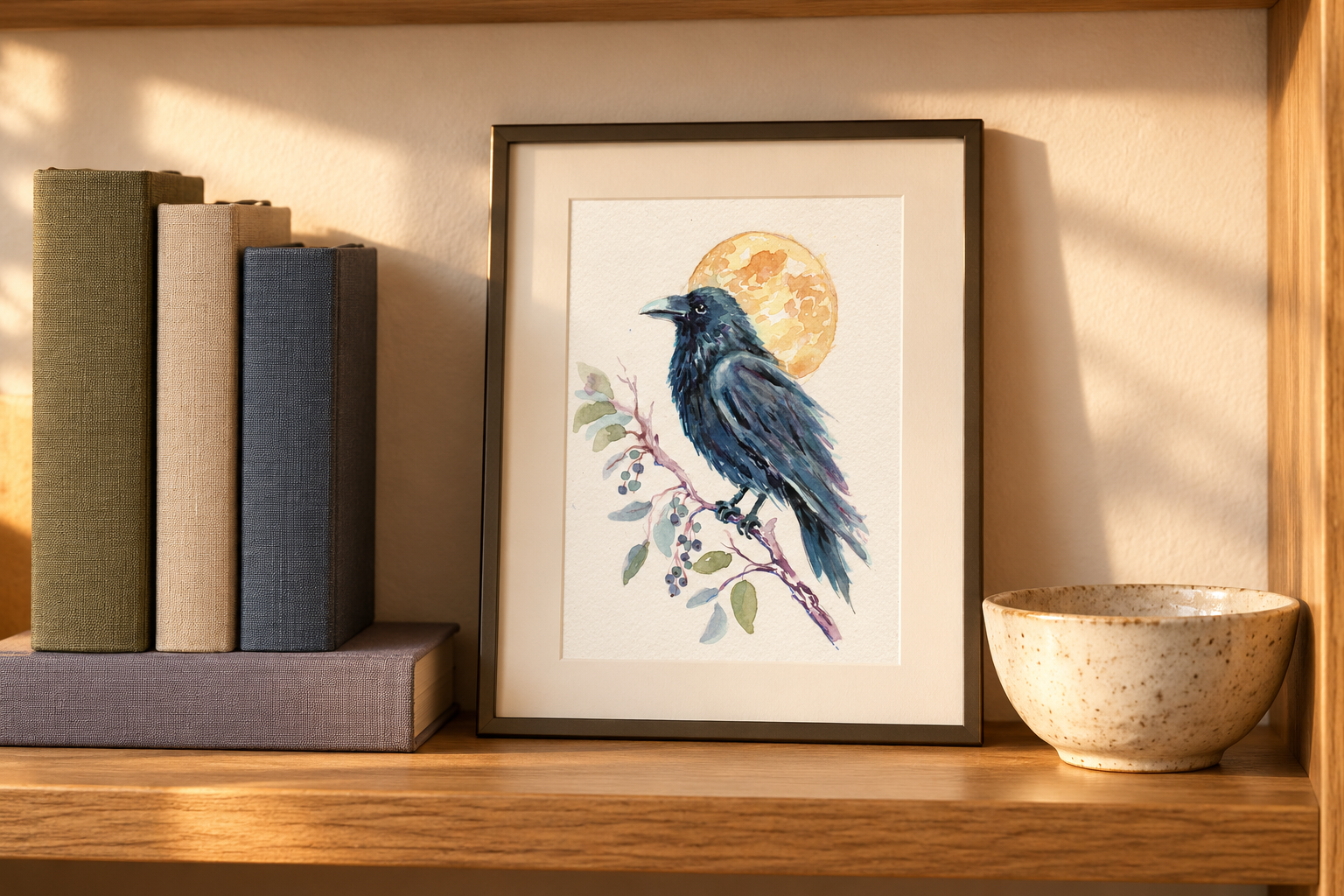
Small framed art print styled with books and a ceramic bowl
Not every print needs to be hung.
A framed 5×7 or 8×10 print can rest beautifully on:
A picture ledge
A bookshelf
A small tabletop easel
A desk
A mantel
A console table
A stack of two or three books
Leaning art creates a softer, less formal feeling. It also allows you to move pieces as your collection changes.
On a bookshelf, place the artwork toward the back and allow one small object to overlap the corner of the frame slightly. A ceramic bird, smooth stone or little vase can create depth without hiding the image.
Resist the urge to fill every open space. One framed print, a few books and a single meaningful object often say enough.
Group Three Small Prints Into One Conversation

Small nature, floral and wildlife prints arranged as a collected gallery wall
Three small prints can hold a wall that would overwhelm one piece.
They do not need to match exactly. Look for a quiet connection:
A color repeated in each image
Three subjects from the natural world
A shared feeling of stillness or joy
Similar frame finishes
A mixture of landscape, floral and wildlife art
Three pieces connected to meaningful places
Lay the arrangement on the floor before hanging it. Start with two to three inches between frames and adjust from there. Smaller work usually feels stronger when the spacing is fairly close.
A straight row feels calm and orderly. A loose cluster feels more personal. If the pieces vary in size, begin with the largest and let the smaller ones move around it.
Do not force a perfect arrangement on the first attempt. Cut paper to the size of each frame and tape the shapes to the wall. Leave them there for a day. You will quickly see if the group needs to move higher, closer together or slightly to one side.
Pair Artwork With Something That Carries a Memory
Art feels most at home when it lives near objects that already belong to your story.
A nature-inspired print might sit beside:
A stone gathered during a family trip
A small vase from your mother
An old book with a beautiful cover
A feather found on a morning walk
A photograph from the place depicted
A handmade bowl
A letter or handwritten recipe
The object should not repeat the artwork too literally. A painting of an owl does not require an entire shelf of owl decorations. One quiet connection is enough.
The purpose is to make the arrangement feel lived with, not merchandised.
Repeat One Color Elsewhere in the Room
A small print begins to feel connected to its surroundings when one of its colors appears nearby.
You might repeat:
A red from a poppy in the spine of a book
A blue from the sky in a small ceramic dish
A soft gold in a lamp base
A green from a landscape in a plant or pillow
A warm neutral in a woven basket
The colors do not need to match precisely. In fact, slight variation usually feels more natural.
A red poppy print such as Whispers of Crimson could be paired with a muted rust textile rather than another bright red object. The relationship would still be visible, but the room would not feel overly coordinated.
Use Light to Invite a Closer Look
Small artwork benefits from gentle, nearby light.
A reading lamp, picture light or table lamp can help a small print hold its place in the evening. Side lighting is especially lovely on textured work because it reveals surface variation without flattening the image.
Avoid direct sunlight, particularly for works on paper. Strong exposure can fade pigments and damage paper over time. If the only available wall receives intense sun for hours each day, consider another location or use glazing designed to provide UV protection.
Watch the artwork at different times of day before settling on its permanent location. Morning light may reveal colors that disappear in the evening, while lamplight may bring out unexpected warmth.
Rotate Artwork Without Treating It Like Seasonal Décor

Small art print styled seasonally with autumn leaves and fresh greenery
Small prints are easy to move, which makes them ideal for a rotating display.
Rotation does not require replacing everything with obvious holiday imagery. Instead, pay attention to mood and color.
During autumn, you might bring forward artwork with rust, gold and deep green. In winter, you may feel drawn to quiet landscapes, moonlight or strong animal subjects. Spring may call for clear color and delicate botanicals.
The same print can remain meaningful throughout the year when the objects around it change. Replace autumn leaves with fresh greenery. Move the print from a dark wood frame into a pale mat. Place it beside a different book or textile.
The artwork remains itself. The room simply gives it a new conversation.
Build a Small Collection Slowly
A collection does not need to begin with a grand plan.
Start with the image you keep returning to. Later, you may find another piece that shares its color, subject or emotional quality. The connection may be obvious, or it may make sense only to you.
That is often how the most personal collections form.
The Joyful Print Society was created for collectors who enjoy receiving a new signed and numbered print from the studio each month. A monthly print can be displayed on its own, added to a growing gallery wall or rotated through a favorite tabletop frame.
Original paintings, limited-edition prints and open-edition watercolors can live comfortably together. They do not lose meaning by sharing a wall. Each piece records a different kind of encounter with the artist’s work.
Small Art Rewards Attention
A small print does not need to dominate the room.
Its strength may be quieter than that. It can greet you beside your morning coffee, keep you company at your desk or hold the memory of a place you love.
Give it a thoughtful frame. Place it where you naturally pause. Let it live beside something that matters to you.
Then allow it to become part of the room slowly, through ordinary days and changing light.
Explore original paintings and nature-inspired prints in the JaeBird Studio shop, or discover a new small-format print each month through the Joyful Print Society.