
How to Start an Art Collection With Small Prints You Truly Love
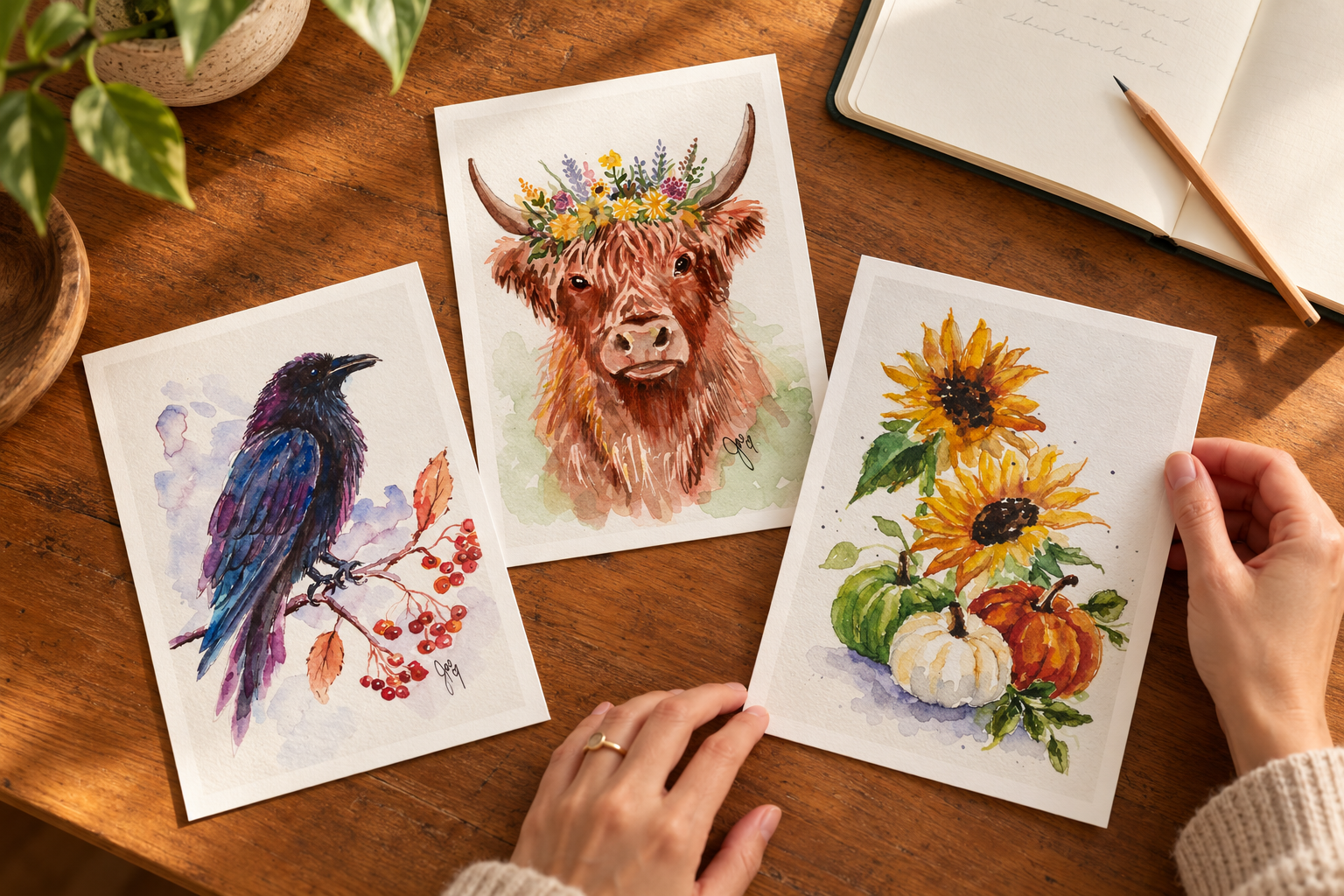
The word collector can sound rather formal. It may bring to mind auction houses, spotless white galleries and people who know how to pronounce every artist’s name.
I think a collection begins much more quietly.
It begins when you notice that you keep returning to the same image. You remember the color of a sky after closing the page. An animal’s expression stays with you. You find yourself imagining where a small painting or print could live in your home.
You do not need a grand plan, and you certainly do not need to purchase everything at once. If you want to start an art collection with prints, one small piece is enough.
Pay Attention to What Keeps Calling You Back
Personal taste is easier to recognize through repetition.
Spend a little time looking at art without immediately trying to decide what to buy. Save the pieces that hold your attention, then return to them several days later.
Look for the connection between them.
Perhaps you are drawn to:
Animals with a strong, watchful presence
Mountains, rivers and remembered places
Soft botanical color
Quiet landscapes with generous skies
Expressive marks and unexpected texture
Images that carry a sense of courage, hope or protection
The connection may have little to do with decorating style. You might live in a contemporary home and still feel deeply drawn to wildlife. You may prefer simple furnishings but love richly layered color.
That tension can make a collection feel personal. It reflects your inner life rather than a furniture catalog.
Give Your First Few Pieces a Gentle Theme
A theme makes the beginning feel less scattered, but it should not become a rule you are afraid to break.
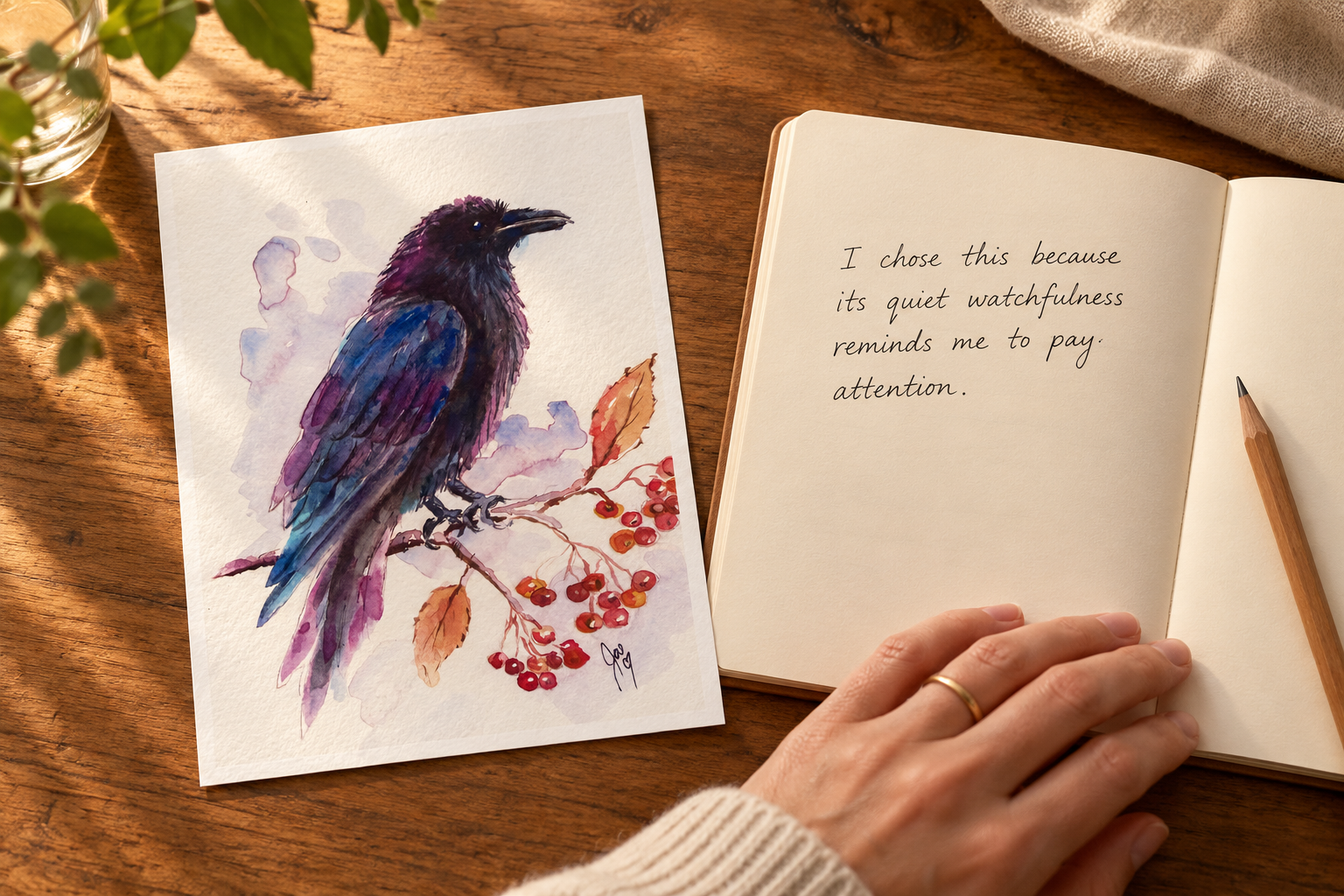
Choose one idea to explore through your first three or four pieces. It could be as broad as places that make me feel peaceful or as specific as birds that remind me to pay attention.
Other possible beginnings include:
Wildlife and quiet strength
Water, reflection and changing light
Idaho, the Tetons and the Greater Yellowstone landscape
Flowers associated with people you love
Art that carries a feeling of hope
A particular color that appears throughout your home
The theme gives you a thread to follow. Over time, another thread may appear. Let it.
A collection should be allowed to change as you do.
Start Small on Purpose
A small print is not a lesser piece of art. Its scale simply changes the way you experience it.
Large artwork announces itself from across a room. Small art asks you to come closer. You begin to notice the edge of a brushmark, a softened wash of color or a detail you missed the first time.
Small prints are also easier to live with while you develop your taste. They can rest on a bookshelf, sit beside a favorite photograph or become part of a loose arrangement on a narrow wall.
If a piece no longer feels right in one room, you can move it. That freedom is useful when you are just beginning to collect.
My guide to displaying small art prints at home offers several ways to frame, group and move smaller works without making them feel insignificant.
Learn the Basic Print Terms Without Letting Them Intimidate You
You do not need a degree in printmaking to choose art confidently. A few simple distinctions will help.
Original artwork
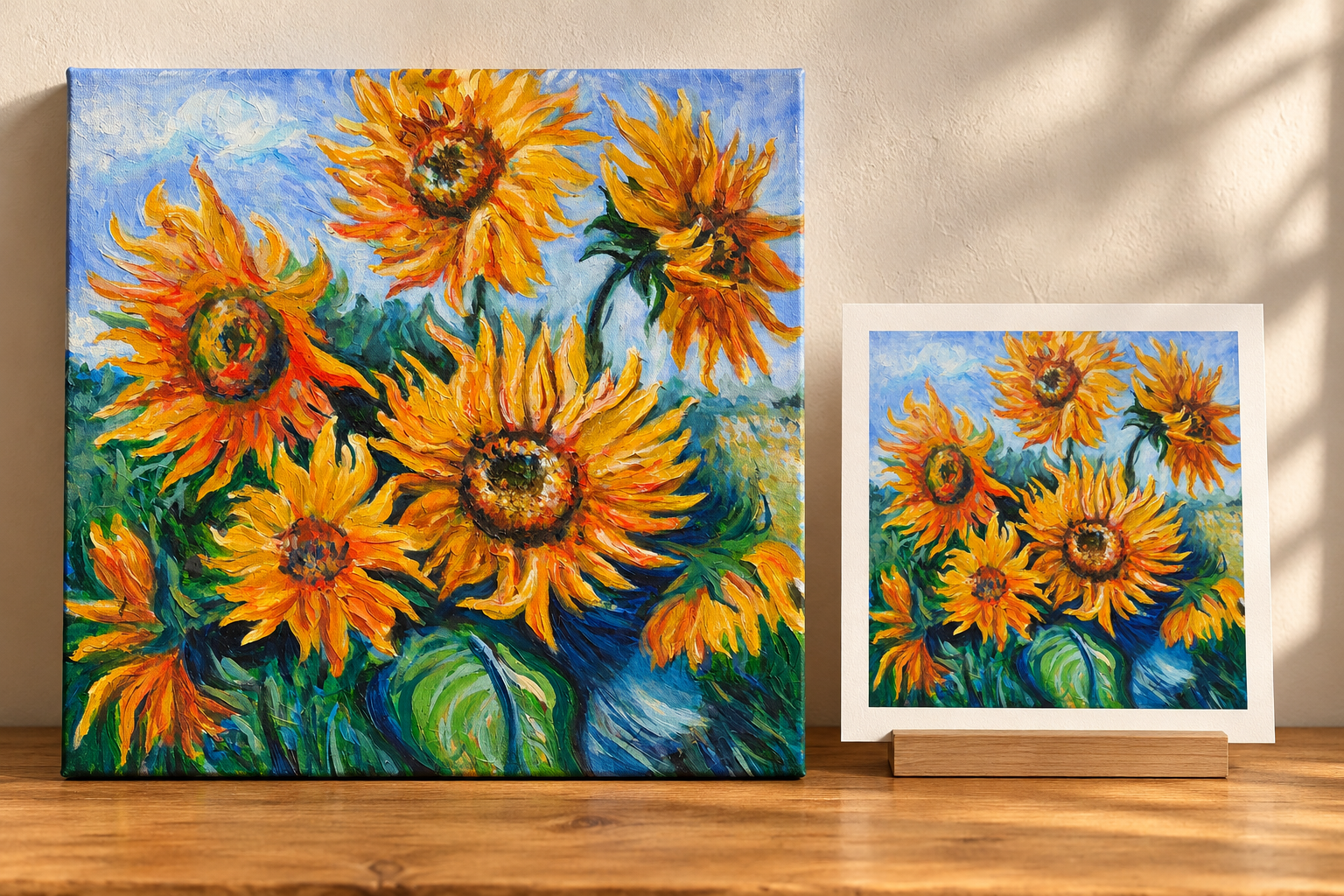
An original painting is the one physical work created by the artist’s hand. Its surface may contain texture, layered color, changes and individual marks that belong only to that piece.
Limited-edition print
A limited-edition print belongs to a set with a defined number of impressions. The artist decides how many will be produced and does not continue printing that edition indefinitely.
Before purchasing, check the artist’s description for the edition size, signature information, paper and printing method.
Open-edition print
An open-edition print is not restricted to a predetermined edition size. This can make it a more accessible way to collect artwork you love, particularly when you are experimenting with subjects, colors and arrangements.
None of these choices makes someone more or less serious as a collector. Choose according to the connection you feel, the surface you want and the amount you are comfortable spending.
Collect the Artist Along With the Image
A beautiful image may catch your attention, but the artist’s story often gives the work its staying power.
Read the description. Look at the artist’s other work. Notice the subjects that return again and again.
Ask:
What is this artist paying attention to?
What feelings appear repeatedly in the work?
Does the artist’s way of seeing the world mean something to me?
Would I like to follow this work as it develops?
When you collect directly from an artist, you may begin to recognize the visual language that connects one body of work to another.
In my Guardians of the Quiet Earth collection, the animals are not simply wildlife subjects. I think of them as presences. Each one carries its own character, symbolism and quiet strength.
One collector may respond to the steady awareness of an owl. Another may feel connected to a wolf or stag. That response can become the beginning of a collection built around meaning rather than matching colors.
Explore the animals in Guardians of the Quiet Earth if that sense of watchfulness and wild presence speaks to you.
Let One Piece Introduce the Next
After choosing your first print, live with it for a while before searching for its companion.
Notice what you continue to enjoy.
Is it the subject, the color or the emotional tone? Does the artwork make a quiet corner feel more settled? Do you stop and look at it when you pass?
Your second piece does not need to match exactly. It only needs a relationship with the first.
A mountain watercolor might lead to another work featuring water. A wildlife print may sit beautifully beside a botanical painting. Two pieces from different collections may share a particular blue, gold or soft violet.
Look for conversation rather than duplication.
That is how a group of individual purchases begins to feel like a collection.
Keep a Simple Record of What You Collect
This does not need to be complicated. A small notebook or digital document is enough.
Record:
Artist’s name
Artwork title
Date purchased or received
Original, limited edition or open edition
Edition number, if applicable
Print size
Paper or medium, when provided
The story of why you chose it
That last note may become the most meaningful one.
Years later, you may remember that a certain print arrived during a difficult season, celebrated a new beginning or reminded you of someone you loved. Those associations become part of the work’s place in your home.
Keep receipts, certificates and artist notes with the record rather than discarding them with the packaging.
Make Room for Art Without Filling Every Wall
A collection does not need to be displayed all at once.
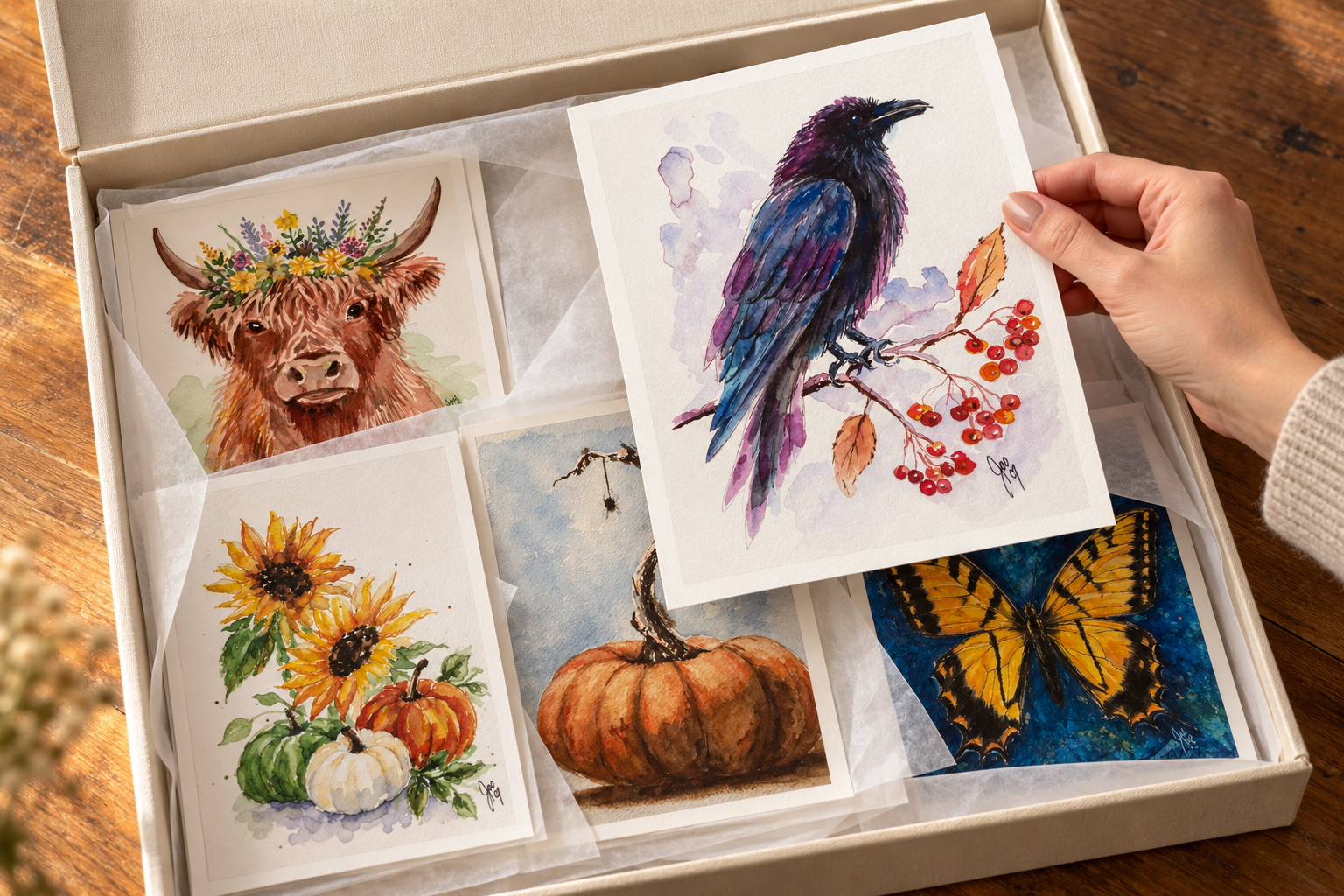
Some pieces can be framed. Others may remain safely stored until you are ready to rotate them. Changing the artwork with the seasons can make familiar pieces feel newly noticed.
Small prints can live:
On a picture ledge
In a bookshelf arrangement
Above a bedside table
In a small hallway
Beside a desk
In a loose group on a narrow wall
Resting on a miniature easel
Use proper backing and keep unframed prints clean, dry and protected from strong direct sunlight.
You can also leave some open space around each piece. A wall does not need to be full before the art matters.
Use a Print Society to Discover What You Love
One challenge for a new collector is choosing from too many possibilities.
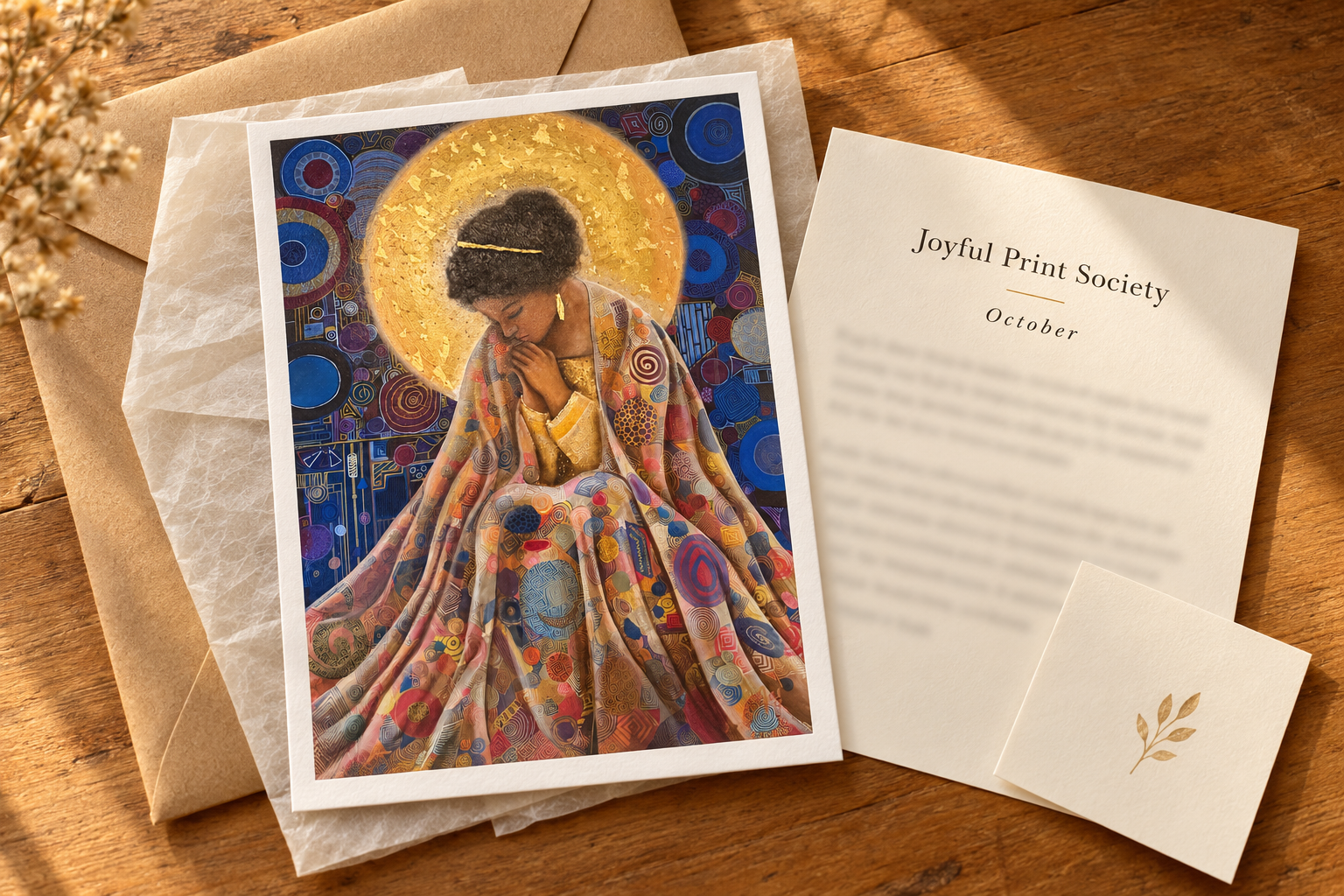
An artist-run print society offers a different experience. Instead of searching through hundreds of images, you receive a piece chosen by an artist whose work you already trust.
The surprise can be useful. A print you might not have selected from a product grid may become the one you respond to most strongly once it is in your hands.
The Joyful Print Society grew from my desire to share art as a continuing presence rather than a single purchase. Each mailing gives members another opportunity to live with an image, notice their response and gradually form a collection.
Before joining any art-print membership, confirm:
How often artwork is mailed
Available print sizes
What is included with the print
Billing and cancellation terms
Shipping locations and costs
Whether gift memberships are offered
Whether member prints are exclusive or may later appear elsewhere
Those details vary from one artist to another. The right membership is the one whose artwork and terms both feel comfortable to you.
Know When You Are Ready for an Original
Collecting prints often helps clarify what you would want from an original.
You may discover that you are especially moved by visible texture, layered paint or metallic details that change with the light. You may find yourself returning to one animal, landscape or painting long after first seeing it.
An original may be right when:
You continue thinking about the work after leaving the page
You want to experience the artist’s actual surface and marks
The piece carries a story you want to live with
Its scale and presence suit a meaningful place in your home
The purchase fits comfortably within your budget
There is no reason to rush this decision.
A collection can include an original painting, several limited editions and many open-edition watercolors. The value of the collection does not come from keeping every piece in the same category.
It comes from the care with which you chose them.
Allow the Collection to Become a Portrait of You
A personal art collection will never be finished in the same way a shopping list is finished.
New pieces enter. Older pieces move to different rooms. One work gains meaning because of something that happens years after you purchase it.
Begin with one small print that makes you pause.
Choose the next only when it adds something honest: a new color, a remembered place, a feeling of protection or a needed note of joy.
There is no requirement to become an expert first. Looking carefully is already a form of collecting.
Explore JaeBird Studio’s nature-inspired prints, or begin receiving art gradually through the Joyful Print Society.