
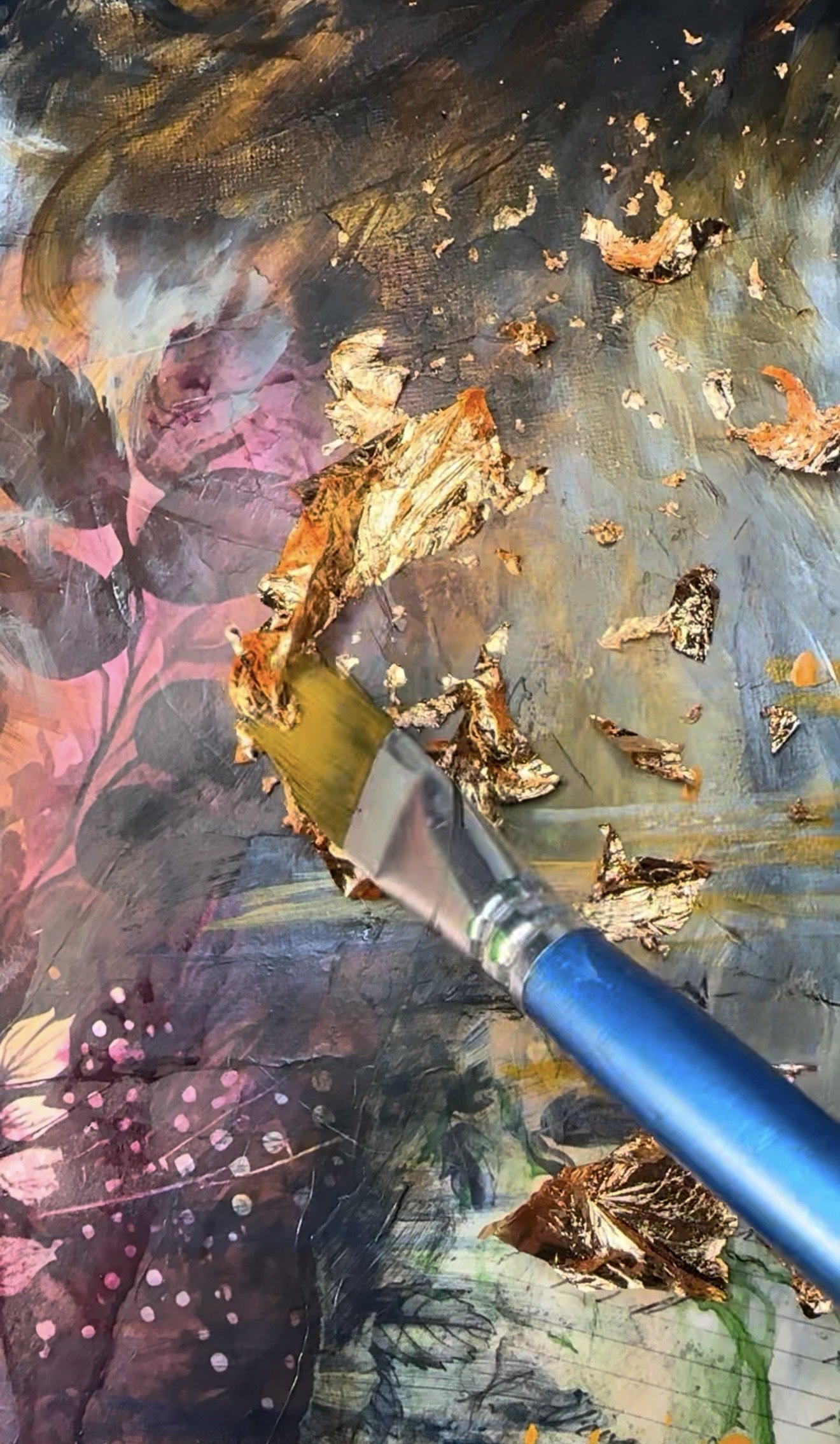
Gold has a way of disappearing until the light finds it.
A painting can look quiet from across the room. Then you move, the sun shifts or a nearby lamp is turned on. A small gilded mark comes forward. Texture that seemed dark begins to glow.
That moment is one reason I return to gold in my work.
I do not use it simply to make a painting look luxurious. Gold helps me show that something within the subject deserves our attention. It may mark the watchfulness of an animal, the dignity of a woman or the small glimmer of hope that remains during a difficult season.
Its meaning changes from painting to painting, but it nearly always begins with light.
Gold Carries a Long Artistic Memory
Artists have applied gold to paintings, manuscripts, screens, sculptures and sacred objects across many cultures and centuries.
Gold leaf is made by beating metal into exceptionally thin sheets and laying those sheets onto a prepared surface. In illuminated manuscripts, artists used metal leaf and gold-based materials for backgrounds, halos, clothing and fine details. Japanese artists developed numerous methods of using gold and silver on paper, silk, lacquer and other materials. ILLUMINATED
Gustav Klimt remains one of the best-known modern painters associated with gold. What interests me about his work is not extravagance. It is the way recognizable figures exist within fields of pattern, ornament and light.
The Belvedere Museum describes Klimt’s gold as a means of carrying a subject beyond ordinary reality and giving it a timeless quality. belvedere.at
I feel that pull in my own work. I want the animal or figure to remain present and believable, but I also want the surrounding surface to suggest something we cannot quite name.
Gold Is My Way of Saying, “Pay Attention”
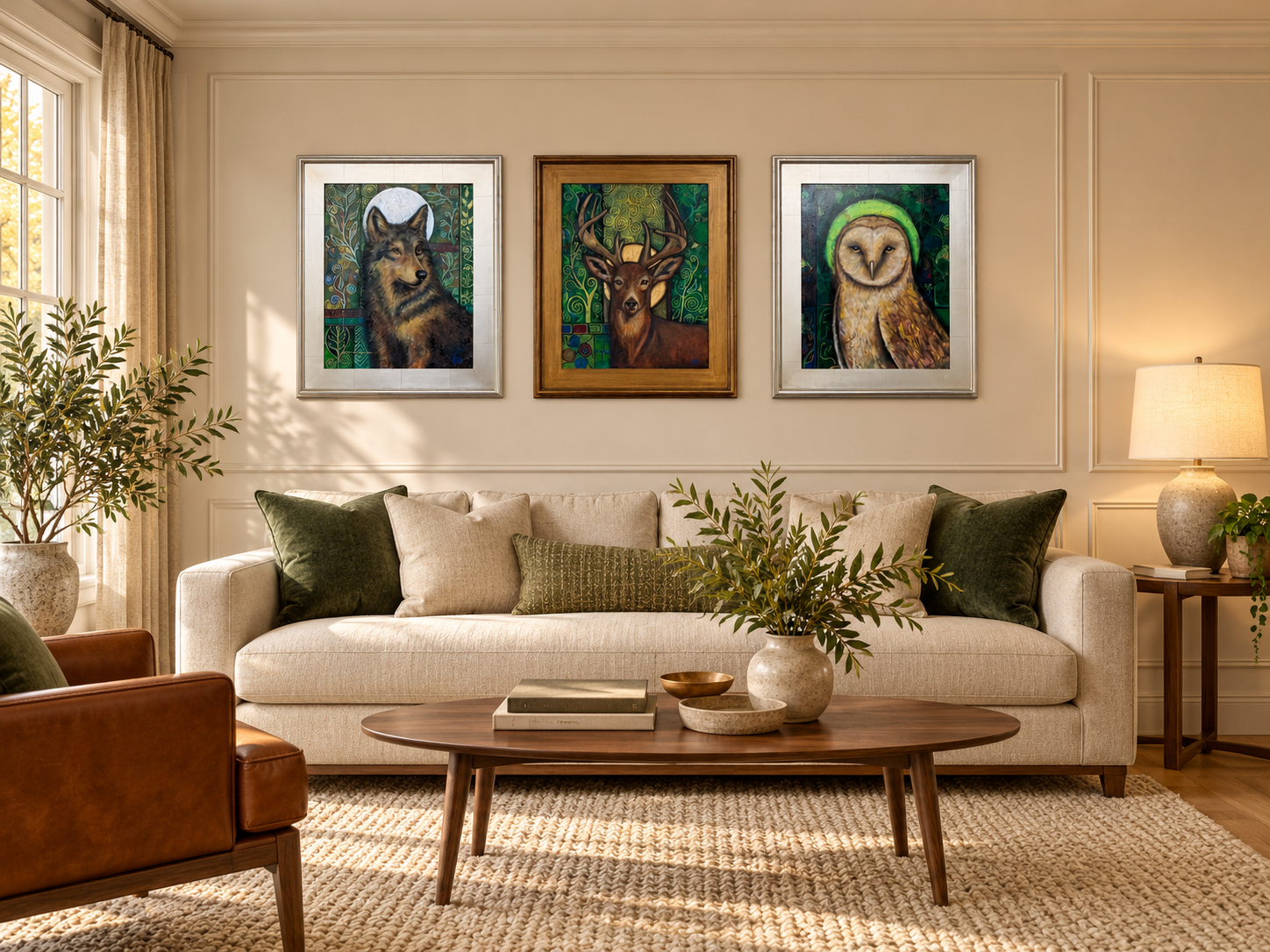
When I add gold near a subject, I am making a visual decision about importance.
A wolf does not need a crown to possess dignity. An owl does not require a literal halo to feel wise or watchful. Still, gold can help us pause long enough to see those qualities.
In my Guardians of the Quiet Earth collection, the animals are surrounded by pattern, texture and gilded details. I think of these marks as a kind of visual language. They speak of reverence, wild intelligence and the responsibility we carry toward the natural world.
The gold does not make the animal precious.
The animal was already precious. The gold helps us remember.
That distinction matters to me.
Gold Can Hold Hope Without Pretending Everything Is Easy
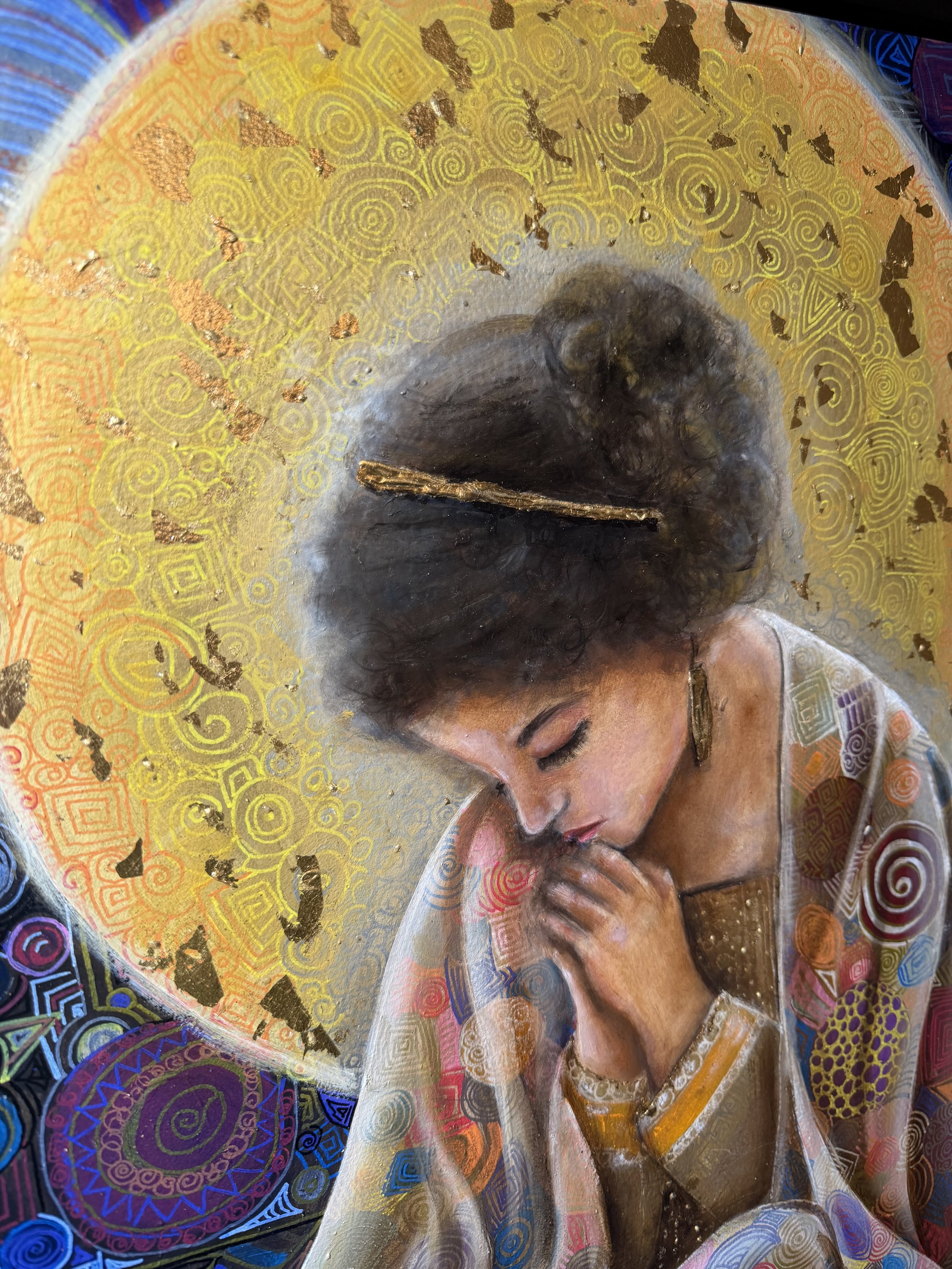
I painted Golden Reverie during a difficult period. I do not share every detail of that season because some experiences remain tender and private.
What I can share is the feeling.
There are times when hope does not arrive as a bright, confident declaration. It may be no more than a thin line. A quiet prayer. A decision to get through the afternoon and begin again the next morning.
The large circle behind the figure is made with imitation metal leaf. I chose it because it catches and releases light as the viewer moves, allowing hope to remain physically present within the painting even while the figure is bowed inward.
She is not celebrating. She is bowed inward, wrapped in pattern and thought. The gold remains behind her even when she cannot seem to look toward it.
That is what I hoped the painting would say: light can still be present when we do not feel strong enough to see it.
The gold does not erase sorrow. It gives sorrow somewhere luminous to rest.
How Gold Enters My Painting Process
I rarely begin a painting with every gold mark fully planned.
My work usually develops in layers. I may start with acrylic color, spray, ink, texture medium, drawing and intuitive marks. The realistic subject grows within that more abstract beginning. Oil paint may come later, bringing depth, softness and greater definition.
Gold enters when I understand what needs emphasis.
Sometimes I want a clean circle or a steady line. In another painting, scattered fragments are more appropriate. A broken edge can feel livelier than a polished one because it allows the surface beneath it to remain part of the story.
Preparing the surface
Metal leaf needs a prepared surface and an adhesive often called size. The timing matters. If the adhesive is too wet, the leaf may become dull or difficult to control. If it is too dry, the leaf will not adhere properly.
Texture changes the result as well. Leaf applied over raised marks catches light along every small ridge.
Laying down the leaf
The material is light enough to respond to breath and air movement. It creases, tears and clings to unexpected places.
I have learned not to fight every irregular edge.
The small breaks and overlaps remind us that the surface was made by hand. They keep the gold from feeling mechanically perfect.
Bringing paint back over the gold
Gold does not always need to remain untouched. I may bring painted pattern, transparent color or fine lines across part of it so that it belongs within the painting rather than sitting on top as an isolated effect.
This is one of my favorite stages. The surface begins to move between representation and ornament, between the visible subject and the feeling surrounding it.
Metal Leaf and Metallic Paint Do Not Behave the Same Way
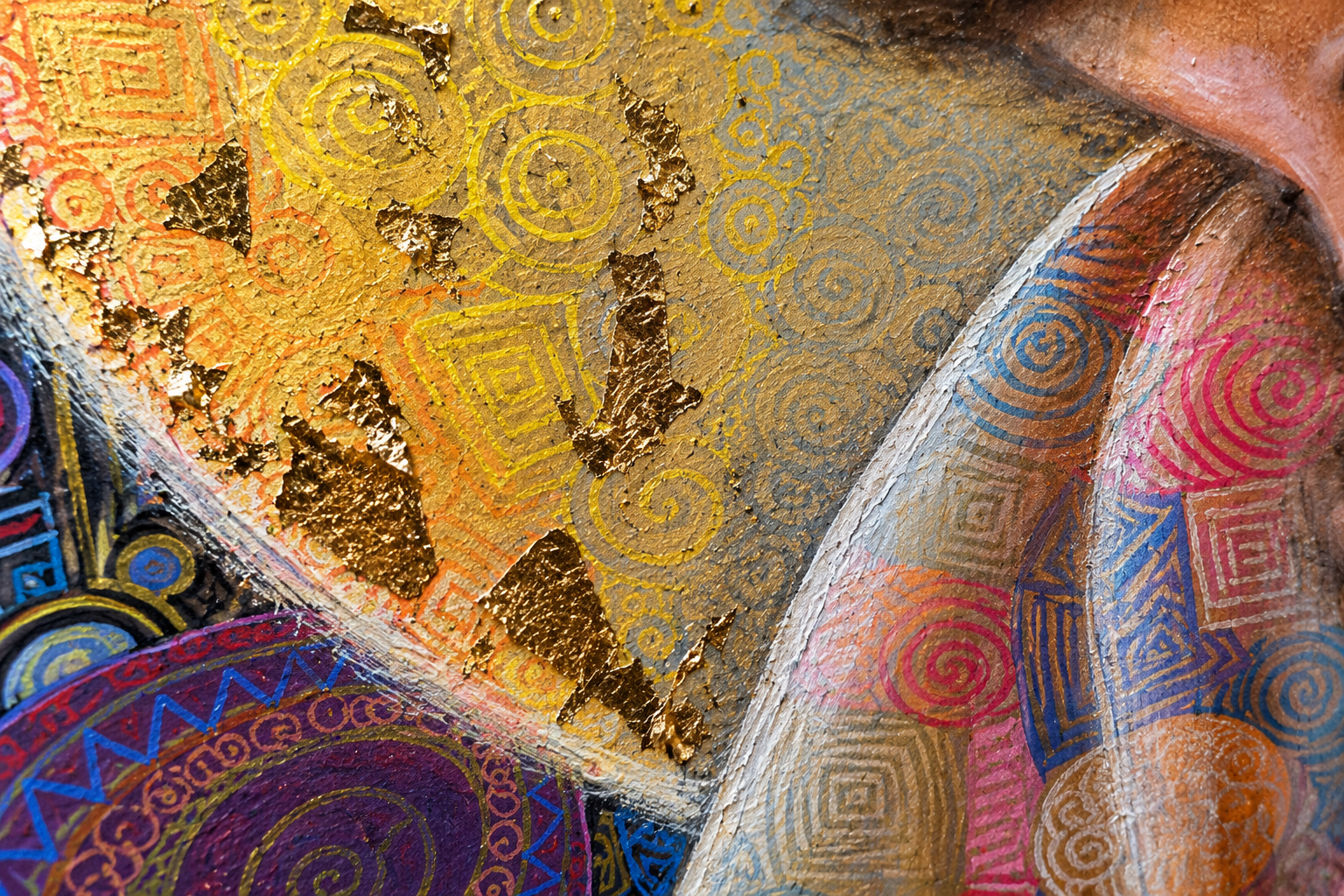
Metallic paint can be beautiful, and I use it when it serves the painting. Imitation metal leaf has a different physical presence. Its thin reflective surface catches light as the viewer moves, allowing gilded areas to brighten, soften or almost disappear.
A photograph captures only one version of that experience.
This is especially noticeable on a textured original. Raised marks catch the light from several directions, so the painting may feel different in the morning than it does beneath a lamp in the evening.
That changing quality is part of the artwork. It asks the viewer to move, return and look again.
Why the Gold in an Original Looks Different From a Print
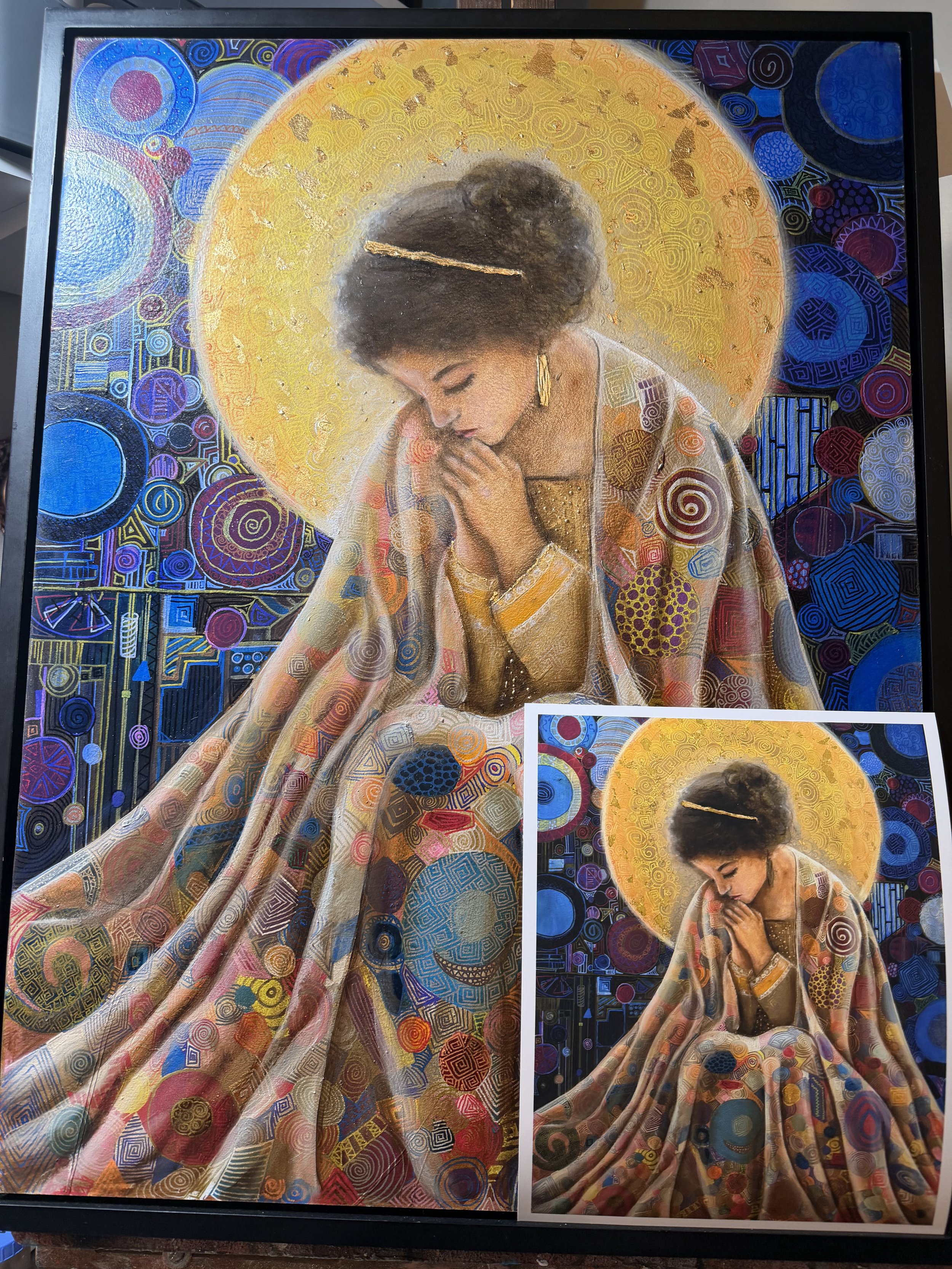
Original mixed-media painting displayed beside its corresponding fine-art print
A well-made giclée print can preserve the composition, color and emotional character of a painting. It allows more people to live with an image that means something to them.
The current prints of Golden Reverie reproduce the gold through printed color and tonal variation. They do not currently have imitation metal leaf applied to their surfaces, so their appearance is quieter and more consistent as the light changes.
I am considering hand-applying imitation metal leaf to selected limited-edition giclée canvas prints. If I do, those pieces will be clearly described as hand-embellished. The leaf will be added individually, so each embellished canvas may contain slight variations.
A hand-embellished print still differs from the original. The original carries the complete painted surface, texture, intuitive marks and first application of the materials. An embellished limited edition offers its own combination of fine-art reproduction and individually applied detail.
How to Display Artwork With Gold Details
Gilded artwork benefits from thoughtful lighting, but it does not need to sit beneath a harsh spotlight.
Try viewing it in several conditions:
Soft daylight coming from the side
A warm lamp placed nearby
A picture light angled gently toward the surface
Morning and evening light
The normal lighting used in the room after dark
Side lighting often reveals texture more clearly than light aimed directly at the center.
Avoid prolonged direct sunlight. Strong light can affect painted materials, papers, adhesives and other components of artwork over time. Conservation guidance generally recommends controlling both light intensity and exposure when displaying paintings. Canada.ca
Do not rub or polish gilded areas. Follow the artist’s care instructions, and ask the artist or a qualified conservator before attempting to clean a delicate mixed-media surface.
Most importantly, place the artwork where you will pass it often. Gold rewards small changes in viewing angle. You may notice something different each time.
Gold Within the Guardians of the Quiet Earth
In The Watcher, gold supports the stag’s steady presence. The animal appears alert without feeling frightened. I wanted strength, stillness and responsibility to exist together.
In The Guide, the wolf carries a quieter form of leadership. The surrounding pattern and metallic detail suggest intuition and movement beyond what is immediately visible.
In The Silent Seer, the owl’s gaze holds the painting. Gold contributes to the feeling of old wisdom, attention and mystery.
These paintings share materials and visual language, but the gold does not mean exactly the same thing in each one.
Its role depends on the guardian.
That is how symbolism stays alive. It responds to the subject rather than becoming a formula repeated from one canvas to the next.
What I Hope the Gold Leaves With You
I hope you notice beauty, but I also hope you feel steadied.
Gold can suggest the sacred without telling the viewer what to believe. It can honor an animal without turning it into an emblem. It can place light beside sorrow without denying the sorrow.
For me, gold often carries the same quiet message:
Something meaningful is here.
Look a little longer.
Explore Guardians of the Quiet Earth to see how gold, wildlife and pattern come together, or discover Golden Reverie and the story behind October’s Joyful Print Society artwork.