
Original Painting, Limited-Edition Print or Open Edition: Which Should You Choose?
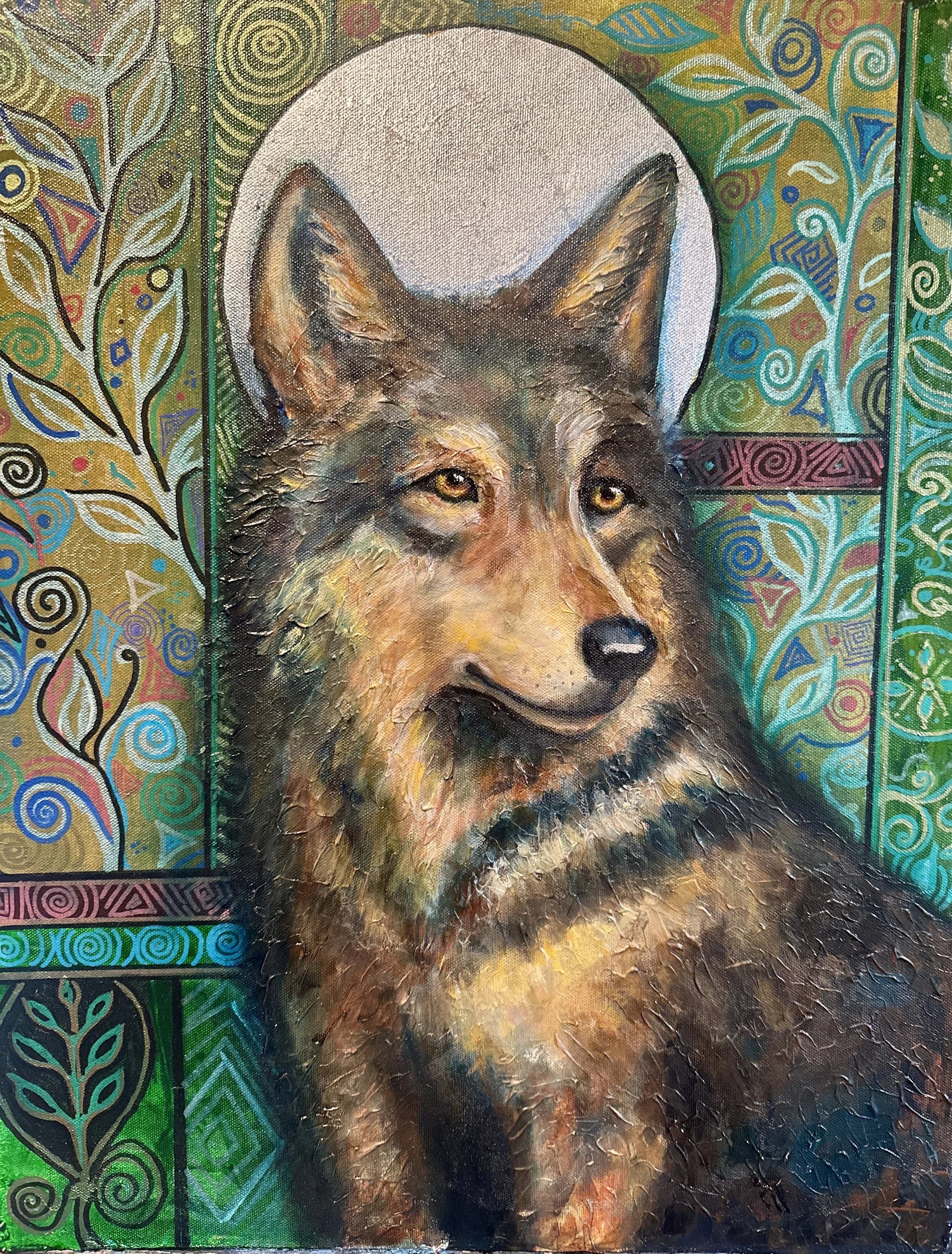
Close-up of the texture and layered surface of an original painting
You find an image that stays with you. Perhaps it is the expression in an animal’s eyes, a field lit by late-afternoon color or a quiet landscape that reminds you of home.
Then you notice several choices: original painting, limited-edition print and open-edition print.
Which one should you buy?
The simplest answer is this:
Choose an original when the artist’s actual surface and the singular nature of the object matter most to you. Choose a limited edition when you want a collectible version produced in a finite number. Choose an open edition when you care most about the image, flexibility and an accessible way to bring art home.
None of these choices is a lesser form of connection. They simply offer different relationships with the artwork.
What Makes an Original Painting Different?
An original painting is the physical work created by the artist. There is only one.
When I build a mixed-media painting, the surface develops through layers. Marks disappear beneath other marks. Texture catches the light. Oil paint brings depth and color over the earlier acrylic, ink or patterned passages.
A photograph can record those details, but it cannot reproduce the complete physical surface.
With an original, you are living with the actual decisions made in the studio. You can see where a brush changed direction, where a palette knife left a raised edge and where a metallic detail shifts as you move through the room.
An original may be right for you if:
You feel a strong connection to one particular work.
Texture and evidence of the artist’s hand matter to you.
You want a one-of-a-kind focal point.
You are building a personal collection over time.
The piece marks an important season, memory or accomplishment.
You have the space and budget to care for it properly.
Buying an original does not require expert knowledge. You are allowed to begin with your own response. Notice which work you return to after closing the page. That repeated pull is worth paying attention to.
What Is a Limited-Edition Print?
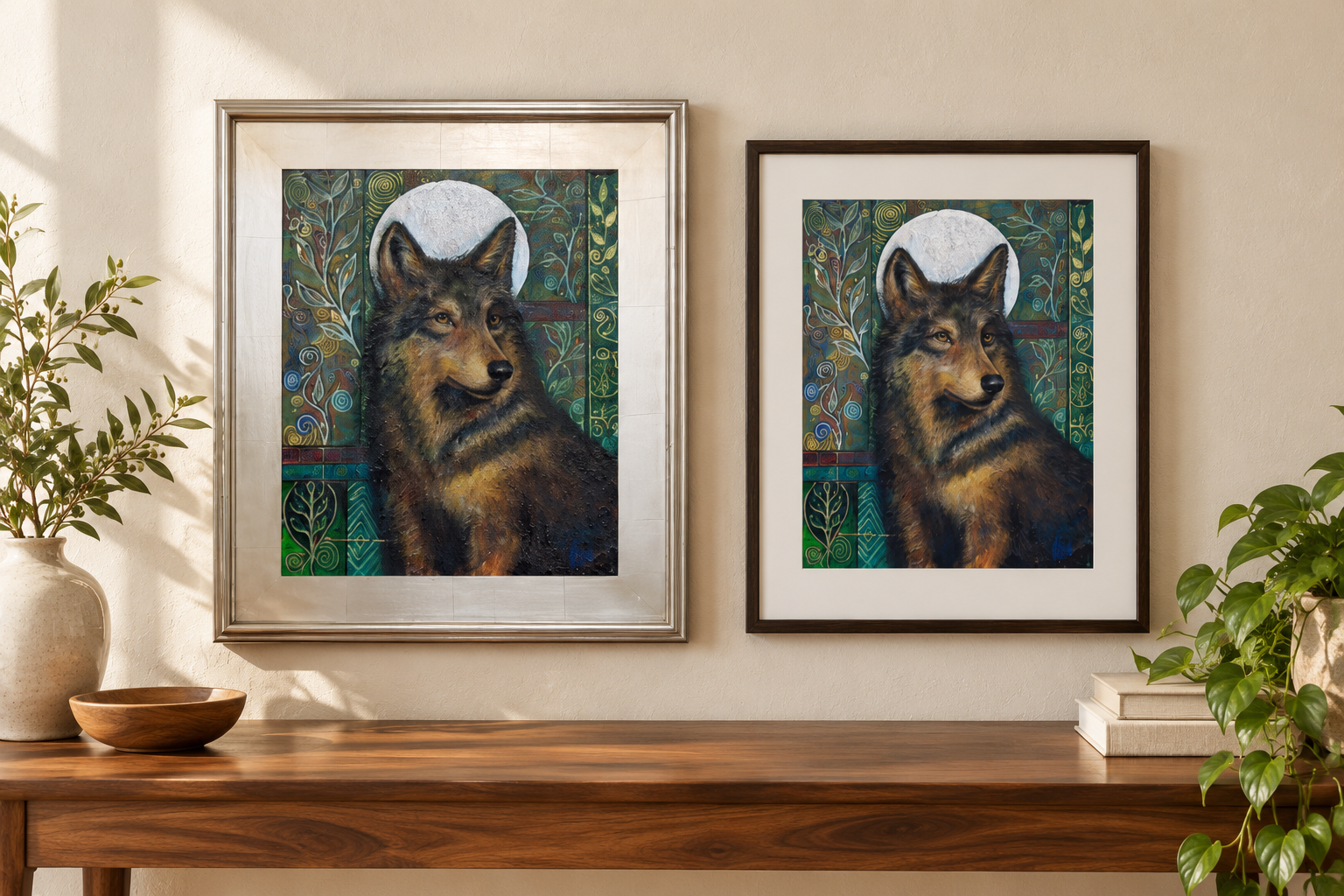
Original and Limited Edition print together
A limited-edition print is produced in a predetermined quantity. Once the declared edition is complete, no more prints are made within that specific edition.
Limited editions are often signed and numbered. A marking such as 12/50 means that the print is number 12 within an edition of 50.
Details vary by artist, so read the individual listing. Look for information about:
The total edition size
The print’s dimensions
The paper or canvas
The printing method
The artist’s signature
Individual numbering
A certificate of authenticity
Whether the print arrives framed, matted, flat or rolled
At JaeBird Studio, selected images from Guardians of the Quiet Earth are offered as limited-edition prints. This gives collectors another way to live with a meaningful image while preserving the finite nature of the release.
For example, The Guide exists as an original mixed-media wolf painting and as a separate signed and numbered limited edition. The original carries the complete physical surface, while the edition allows more than one collector to connect with the wolf’s quiet strength.
A limited edition may suit you if:
You want a signed, numbered piece.
A finite edition feels meaningful to your collection.
You love an original that is outside your current budget.
You need a different size or format for your home.
You want to follow and support a particular artist.
You appreciate knowing how the print was produced.
A limited edition should not be presented as a guaranteed financial investment. Its future market value depends on many factors, including the artist’s career, demand, condition and provenance. Buy it because the image matters to you and because the edition details feel honest and clear.
What Is an Open-Edition Print?
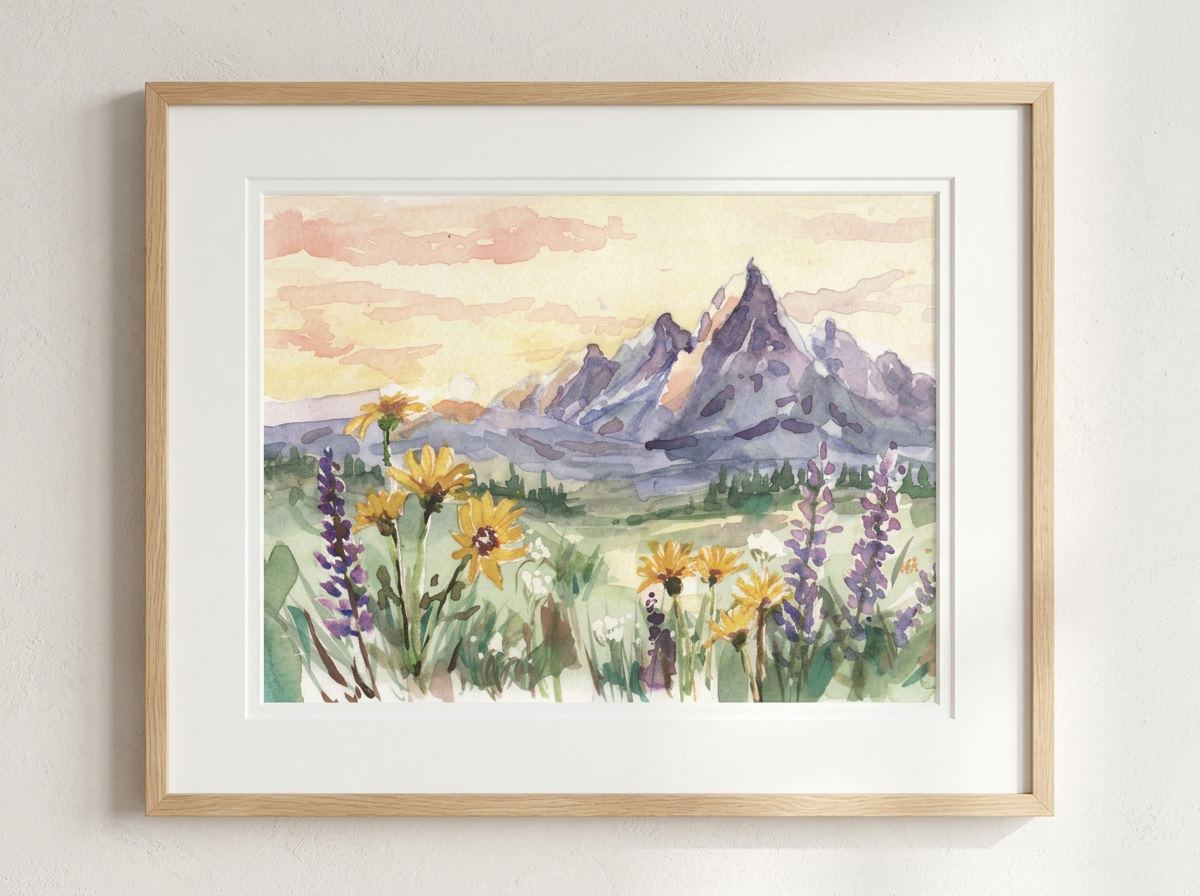
Open ended print with a mat and frame
An open-edition print does not have a predetermined production limit. It is generally not individually numbered, although an artist may still sign it.
Open editions make it possible for an image to remain available to a wider group of people. They are especially useful for smaller spaces, thoughtful gifts, gallery walls and collectors working within a specific budget.
An open edition may be the right choice if:
Your connection is primarily to the image itself.
You want an approachable first purchase from an artist.
You are decorating a small or temporary space.
You enjoy changing artwork with the seasons.
You are building a gallery wall.
You want to give art without committing to a larger original.
You need a standard size that is easier to frame.
My open-edition watercolor prints preserve the color, movement and subject of the original watercolor in a format that is easier to place in many homes.
Where Wildflowers Meet the Sky, for example, is currently offered as an open-edition reproduction of an original mountain watercolor. The edition remains open rather than being permanently closed after a certain number.
Open does not mean thoughtless. A well-chosen open-edition print can hold a treasured memory, bring light into a difficult corner or become the piece a child remembers from the home where she grew up.
Meaning is not measured by scarcity alone.
Does “Giclée” Mean Limited Edition?
No. The word giclée describes a method of inkjet printing. It does not tell you whether the print is limited, open, signed, numbered or produced on a particular surface.
A giclée may be:
A signed and numbered limited edition
An open edition
Printed on fine-art paper
Printed on canvas
Part of a monthly collector release
Read beyond the word itself. The listing should tell you what is being offered and how that particular edition is handled.
For a limited edition, look for a clearly stated edition size. For any print, check the material, dimensions, signature, framing status and care information.
Ask Yourself What You Most Want From the Artwork
The choice becomes easier when you stop asking which option is considered “best” and begin asking what you want the piece to bring into your life.
Do I want the actual surface?
If visible texture, metallic details and the physical evidence of the artist’s hand are central to your response, choose the original when possible.
Do I value a finite release?
If numbering, scarcity and belonging to a defined edition matter to you, a limited-edition print may feel right.
Is my strongest connection to the image?
If the subject or feeling is what holds you, an open edition may give you everything you need.
Where will the artwork live?
Consider the wall, nearby furniture and viewing distance. A smaller print can bring intimacy to a reading corner or bedside table. A larger original can establish the emotional center of a room.
Measure before purchasing. Mark the dimensions on the wall with painter’s tape and look at them from across the room.
What can I comfortably spend?
Art should bring pleasure into your home, not anxiety to your finances.
Set a thoughtful budget and work within it. An open-edition print purchased with genuine affection is a better choice than an original bought under pressure.
Am I choosing for myself or as a gift?
A limited or open-edition print can be easier to give because the recipient has more flexibility with framing and placement.
An original is a deeply personal gift. It works best when you know the recipient’s taste, available space and relationship to the subject.
A Personal Collection Can Include All Three
Your collection does not need to follow one rule.
An original painting might hold the main wall in your living room. A signed limited edition may bring a favorite artist into your office. Smaller open-edition watercolors can fill a hallway or gather into a gallery wall.
Together, they can tell a richer story than a collection built around status alone.
I am drawn to collections that feel lived with. They grow through birthdays, travels, encounters with artists and moments when an image arrives at exactly the right time.
There is refinement in choosing carefully, but collecting should still leave room for delight.
Consider a Print Society if You Enjoy Discovery
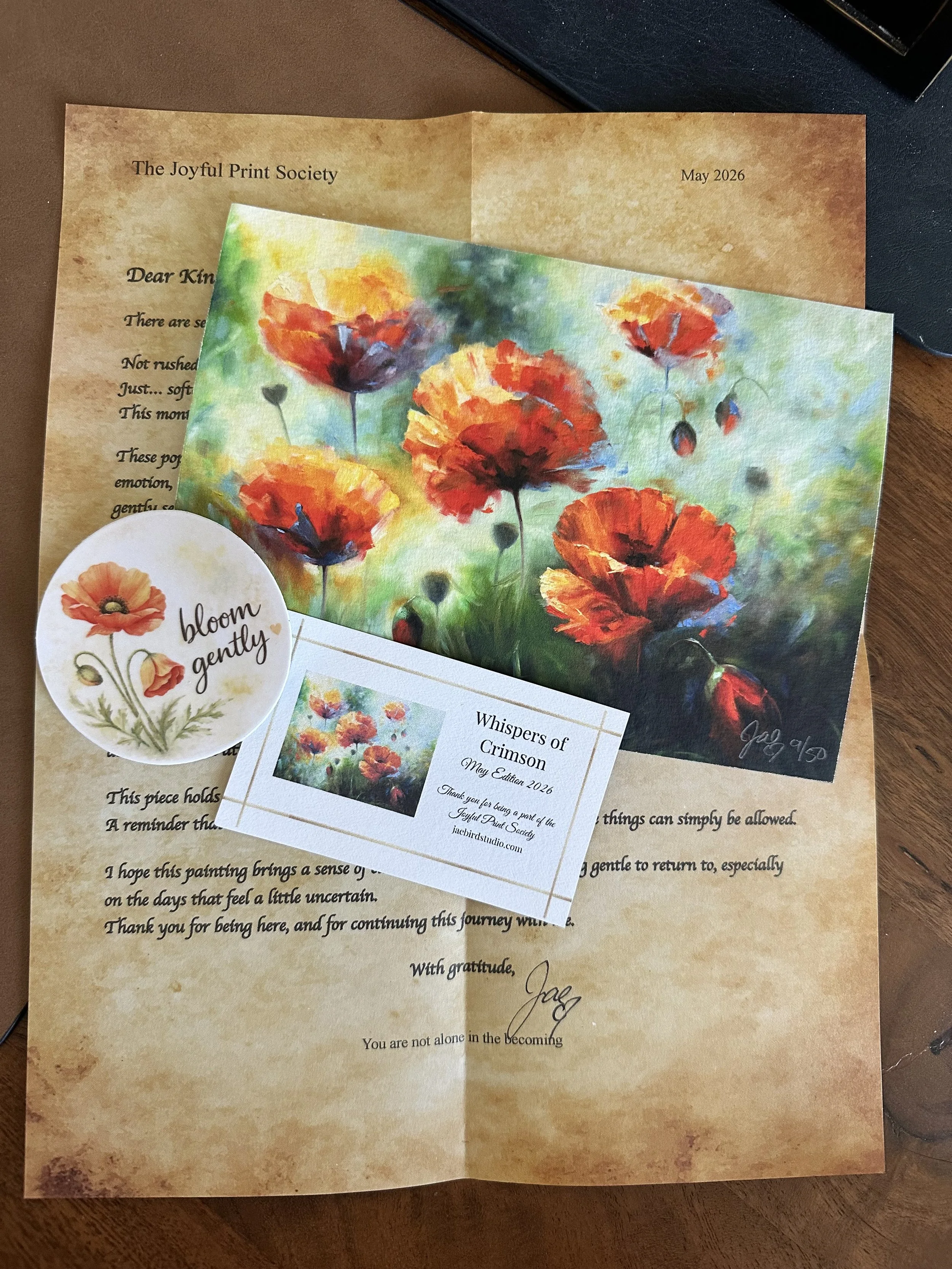
Joyful Print Society monthly subscription
Some collectors know exactly which image they want. Others enjoy meeting new artwork over time.
The Joyful Print Society offers a monthly way to build a collection through signed and numbered fine-art prints prepared through my studio. It may appeal to someone who enjoys surprise, continuity and the feeling of following an artist’s work as it develops.
Before joining any art membership, review the current edition policy, enrollment period, shipping schedule and cancellation terms. Make sure the format suits the way you prefer to collect.
What Should You Verify Before Buying Art Online?
A clear listing should answer the practical questions that affect your purchase.
Before checking out, confirm:
Is this the original artwork or a reproduction?
Is the print limited or open edition?
Is it signed?
If limited, what is the full edition size?
Is it individually numbered?
Is a certificate of authenticity included?
What are the exact dimensions?
What paper, canvas or panel is used?
Is the frame or mat included?
How will it be packaged and shipped?
What is the return policy?
How should it be displayed and cared for?
If something is unclear, ask the artist. Thoughtful questions are welcome. They show that you care about the work and want to understand what you are bringing home.
Choose the Relationship You Want With the Art
An original offers the singular surface created in the studio. A limited edition brings together faithful reproduction and a finite release. An open edition gives the image room to reach more homes.
Your decision does not need to impress anyone.
Choose the piece you want to meet each morning. Choose the animal, landscape or color that steadies you. Choose the format that respects your home and your budget.
That is how a collection begins to feel like your own.
Explore the original paintings, limited-edition prints and open-edition watercolor prints currently available in the JaeBird Studio shop. For a collection that grows one release at a time, visit the Joyful Print Society.