
How to Give Art as a Gift Without Guessing Wrong
Giving someone art can feel wonderfully personal. It can also leave you standing in front of a screen asking yourself a dozen questions.
Will it suit their home? Is the color right? Should I choose an original painting or a print? What if they like it but have nowhere to hang it?
These are sensible concerns. Art becomes part of a person’s surroundings, so choosing it asks for a little more thought than picking up a familiar candle or bottle of wine. That thoughtfulness is also what makes it memorable.
You do not need to know every detail of someone’s decorating style. You need one honest point of connection: an animal they love, a landscape they miss, a color that lifts them or a feeling you hope the artwork will bring into their home.
Here is how I would begin.
Start With the Person, Not the Empty Wall
It is tempting to think first about colors, frames and measurements. Before you do, think about the person receiving the gift.
What do they notice when they are outdoors? Which places matter to them? Is there an animal, flower or landscape that appears repeatedly in their stories?
A few possibilities might come to mind:
Someone who watches for owls on evening walks
A friend who feels most at peace near mountains
A gardener who waits all year for the sunflowers
A family member with a deep affection for wolves, horses or deer
Someone beginning a new chapter who might connect with the transformation of a butterfly
A loved one who misses the open country where they grew up
These details give you a better starting point than trying to match the sofa perfectly.
Art does not have to document a specific memory to awaken one. A mountain watercolor may recall family trips. A watchful animal may represent courage, wisdom or protection. A field of flowers can bring back the feeling of a garden without depicting the exact place.
That emotional recognition is what makes an art gift feel chosen rather than simply purchased.
Choose the Feeling You Want to Give
Consider what you want the artwork to offer each time the recipient sees it.
Perhaps your hope is that it will bring:
Calm to a busy room
Courage during a difficult season
Joy to an everyday corner
A feeling of protection
Freedom and possibility
Connection to the natural world
A reminder of home
This can help you choose among several beautiful pieces.
An owl may feel quiet and observant. A wolf can suggest intuition or loyalty. A stag often carries a dignified, steady presence. Butterflies speak naturally of change, while open landscapes can create a welcome sense of room to breathe.
There is no universal meaning that must be assigned to an image. The recipient’s connection matters more than a formal interpretation.
Original Painting or Art Print?
Both can be meaningful gifts. The right choice depends on the occasion, the recipient and how much certainty you have about their taste.
Give an original when the moment calls for something singular
An original painting carries the artist’s physical marks. Texture, layered color and small variations in the surface belong to that one work.
An original may be especially appropriate for:
A milestone birthday
A wedding or significant anniversary
A retirement
A new home
A major accomplishment
An established art collector
A person whose taste you know very well
Choose an original when the artwork itself feels inseparable from the person. You look at it and know why it belongs with them.
Before purchasing, confirm its dimensions, framing and shipping details. You should also have a reasonable sense of where the recipient might display it.
Choose a limited-edition print for beauty with a collector’s quality
A limited-edition print can be a graceful middle ground. It carries the image of an original work while belonging to a defined edition.
This can suit someone beginning an art collection or a recipient who appreciates knowing that the number of prints is limited.
When considering one, read the product description carefully. Look for information about the edition, size, paper or canvas, signature and framing. Those details can differ from one artwork to another.
Choose an open-edition print when flexibility matters
An open-edition print is often a thoughtful choice for a friend, host, new homeowner or loved one whose available wall space may be limited.
It lets you give a meaningful image without asking the recipient to accommodate a large or one-of-a-kind work. A smaller watercolor print can bring color to a reading corner, office, bedroom or entryway.
It can also be easier for the recipient to frame according to their own home.
The meaning is not reduced because the gift is a print. What matters is the connection you recognized when you chose it.
Let Their Home Offer Clues
You do not need to conduct a secret decorating inspection. A few broad observations will help.
Notice the colors the person already chooses. Are their rooms soft and quiet, rich and dramatic, light and cheerful, or full of saturated color?
Then look for artwork that feels comfortable in that world.
For a calm, neutral home, consider a piece with open space, restrained color or a peaceful subject. For someone who surrounds herself with vivid textiles and collected objects, a bolder painting may feel far more personal than a safe beige image.
You can also look at the kinds of frames already in the home. Simple black, pale wood, warm gold and white are all clues.
The artwork does not need to match every object in the room. It should feel as though it could join the conversation.
When You Do Not Know Their Decorating Style
Choose a smaller piece and rely on personal meaning.
A small print connected to a favorite animal, flower or place is easier to display than a large statement work. It can rest on a shelf, join a gallery wall or be framed for a desk or quiet corner.
You can also invite the recipient into the final decision. Include a note explaining why you chose the subject, then offer to help select the frame together.
That does not make the gift less complete. It gives them a hand in deciding how the artwork will live in their home.
Pay Attention to the Story Behind the Artwork
A story can turn a beautiful image into a gift that feels deeply considered.
My painting When the Owl Appears, for example, grew from memories of watching for a barn owl near my childhood home. Most days it remained hidden. The rare sight of its wings felt like a small gift from the wild.
Someone who loves owls may respond first to the subject. Someone else may connect with the idea of patience, attention or the rare moments that reward us for looking.
When choosing art, read the artist’s description. Ask what inspired the work and what the artist hoped to preserve in it. If that story reminds you of the recipient, share it in the card.
You might write:
“I chose this because it reminded me of the way you always notice the small, beautiful things the rest of us miss.”
One sincere sentence can give the artwork another layer of meaning.

A close-up of When the Owl Appears.
Consider a Series for Someone Who Loves to Collect
If the recipient already enjoys art, look for a related collection rather than choosing from unrelated pieces.
A collection provides a common visual language. The works might share a subject, palette, landscape or idea while allowing each piece to have its own character.
The animals in my Guardians of the Quiet Earth collection are rooted in the presence and symbolic strength of wildlife. A wolf, stag and owl each carry a different energy, yet they belong to the same imagined world.
One piece can stand alone. It can also become the beginning of a collection that grows over time.
For someone who enjoys receiving and discovering new artwork, the Joyful Print Society offers another approach. Members receive a signed and numbered fine art print from my studio each month. Because membership details and enrollment periods can change, check the current page before purchasing or giving it to someone else.
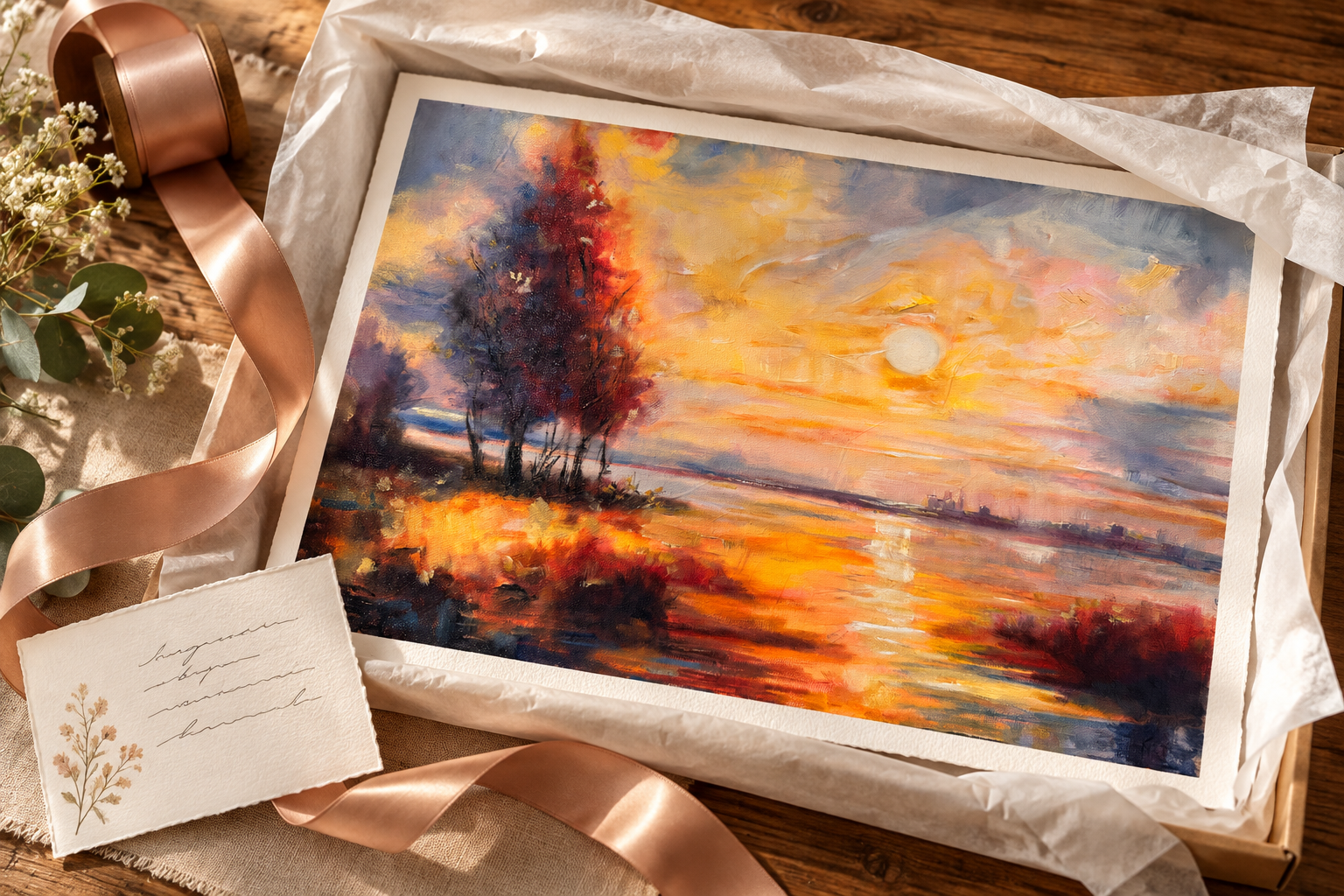
Small nature art print displayed in a quiet reading corner
A Few Things to Confirm Before You Buy
Once a piece feels right, pause for a practical check.
Confirm:
The artwork’s exact dimensions
Whether those dimensions include a frame
Whether it arrives framed, matted or unframed
The printing surface, if it is a print
The current edition information
Shipping cost and estimated timing
The return or exchange policy
Whether gift notes or direct gift shipping are available
If you are hoping to give a membership or subscription, confirm that it can be purchased for another person. You may need to use the recipient’s mailing information or make arrangements with the artist.
These details are not especially romantic, but they prevent surprises.
Give the Meaning Along With the Art
The final part of the gift is telling the recipient why you chose it.
You do not need an elaborate explanation. Speak plainly.
“I thought of the mornings you spend watching the birds.”
“This landscape reminded me of our trips through the mountains.”
“The strength in this animal felt like you.”
“I wanted you to have something joyful in your new home.”
Artwork continues to reveal itself after the wrapping is gone. Its colors respond to changing light. New details appear. Its meaning may deepen as the recipient’s life changes.
A thoughtfully chosen piece says, “I see what matters to you.” That is the part they will remember.
Browse the originals and fine art prints at JaeBird Studio to find a piece connected to someone you love.
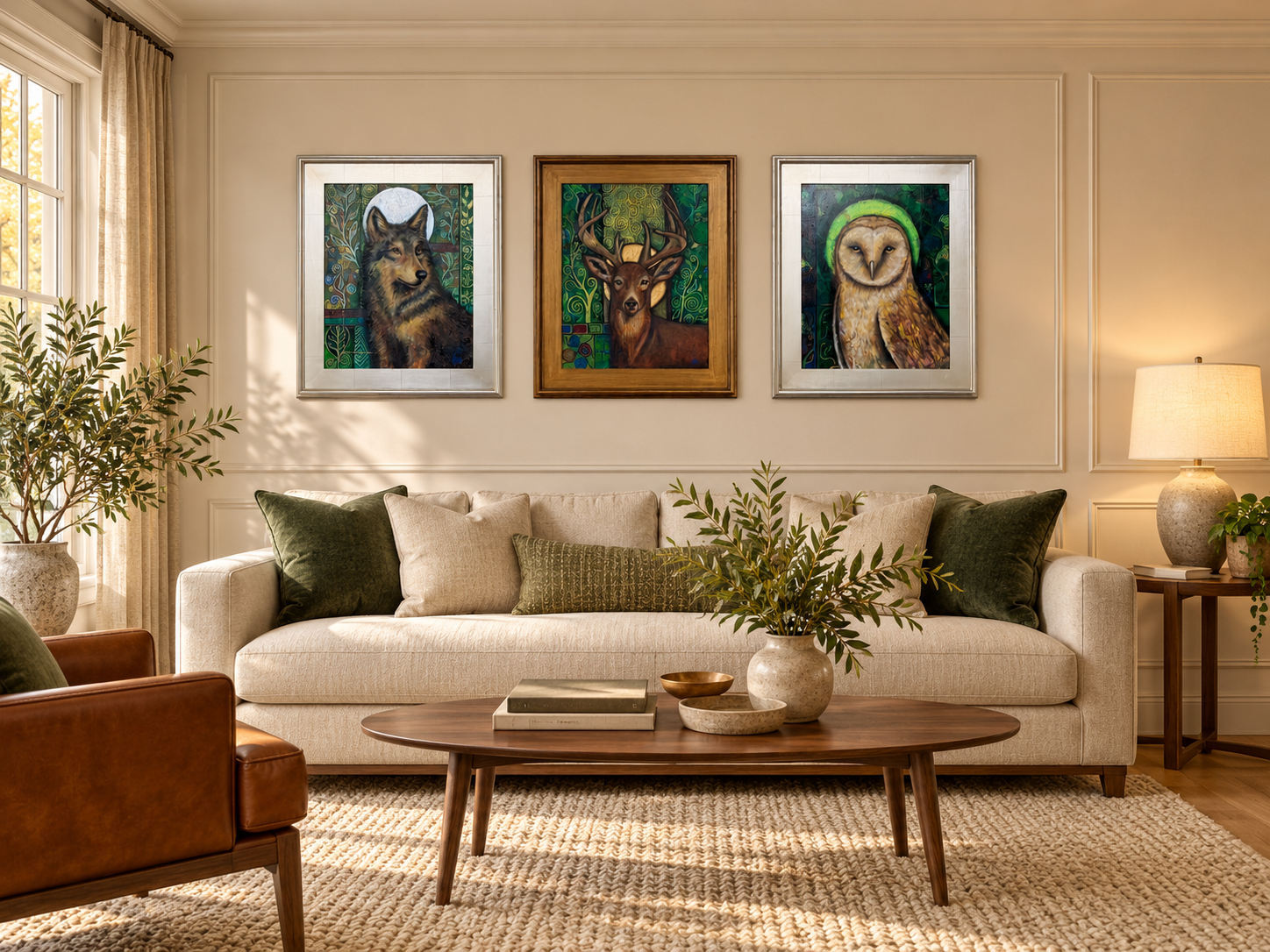
Wolf stag and owl artwork from Guardians of the Quiet Earth